
Fake Police Call
M.128KBParenting
4.77.00 Reviews
- Version
- 1.6.3
- Installs
- 10.00K
- Age Rating
- Everyone
Screenshots

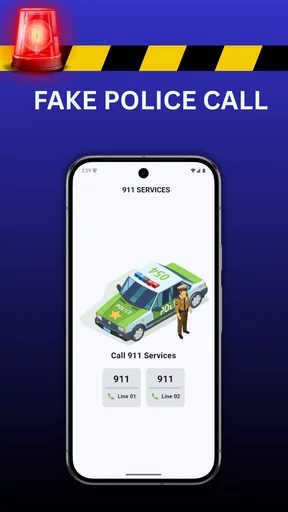
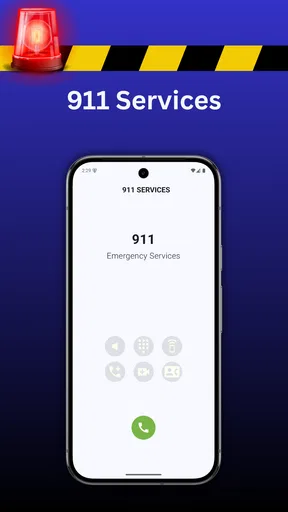
Our Review of Fake Police Call
 Analysis by Appyee
Getting a child to tidy up can turn a simple request into a long negotiation. Fake Police Call takes a very specific approach: it turns that moment into a pretend emergency call, giving parents a playful way to interrupt resistance and redirect attention toward cleaning. I tried to look at it not as a serious parenting solution, but as a small tool for a very particular situation. Its value depends almost entirely on whether your child responds well to imaginative role-play.
This is a free parenting app from M.128KB, rated for Everyone and available for devices running Android 5.0 or later. It has a 4.7 average from over 400 ratings and has passed 10 thousand installs, which suggests that the idea has found an audience despite its narrow purpose. The current version is 1.6.3, and the app was released on March 17, 2023. Those details matter less than the central question: can a pretend police call make tidying feel easier without creating a new problem?
A pretend call designed to change the mood
I see the pretend call as a brief change of tone, not a shortcut that can do the tidying for a child. In this section, I’d focus on how the idea may land differently depending on a child’s temperament, then turn to the practical question of choosing a moment when playful role-play can help rather than add pressure.
The app’s one clear capability
The main capability is simple and deliberately focused. Instead of repeating “please put your toys away,” a parent uses the app to create the impression that a police officer is calling about the untidy room. The child is invited into a short piece of make-believe, and the hope is that the change in tone makes cooperation more likely.
That distinction is important. This is not a chore planner, reward chart, timer, educational game, or household organizer. It does not try to manage a complete routine. Its purpose is to provide a dramatic prompt at the exact point when ordinary instructions have stopped working. In my view, that narrow design is both its strongest feature and its biggest limitation.
The idea works because children often react differently to a story than to a repeated command. “Clean your room” can become background noise after several reminders. A pretend call introduces a new event, and that event can briefly capture attention. The app is therefore less about policing behavior than about giving a parent a fresh opening to say, “Let’s start with the blocks,” while the child is still engaged.
I would be careful with the word “police,” though. Some children may find the theme funny and exciting, while others may feel genuinely frightened by authority figures or emergency situations. The same call that makes one child laugh could make another child anxious. The tool should be used as light role-play, not as a threat that the police are actually coming.
Why the approach can work in a difficult moment
When a child refuses to tidy, the problem is often not simply laziness. The room may feel overwhelming, the child may be tired, or stopping an enjoyable activity may feel unfair. A pretend call can break the stalemate because it changes the emotional frame. It gives the child something to respond to instead of forcing the parent to repeat the same instruction louder.
There is also a useful element of distance. A parent who has already asked several times may be frustrated, and frustration can make the exchange feel personal. A short role-play moment can reset the conversation. Once the child is listening, I would immediately make the task concrete: collect the cars first, place the books on the shelf, then move to the stuffed animals. Without that follow-through, the call is only a distraction.
The app’s effect is likely to be strongest with children who enjoy pretend play and understand that the situation is fictional. It is less convincing as a general discipline method. A child who has heard the same trick many times may stop responding, while an older child may recognize the setup immediately and reject it. That does not make the app useless; it means the novelty should be treated as occasional help rather than a permanent replacement for routines.
How I would use it in practice
I would not open it at the first sign of a messy room. First, I would give a clear, ordinary instruction and explain the limit: the toys need to be put away before the next activity. If the child refuses and the conversation starts looping, that is the moment when the app may be useful. Used too early, it can teach a child to wait for a dramatic intervention instead of responding to a normal request.
The best workflow is short. Prepare the child for the pretend conversation, use the call as a playful prompt, and then take over the practical part of the routine. A parent should remain nearby and help define the first small action. “Put everything away” is vague; “put the red blocks in this box” is easier to begin. The call opens the door, but the parent still has to guide the child through it.
Another useful tip is to end the role-play quickly. Once the child starts tidying, there is no need to keep extending the performance. Continuing to act as though an officer is monitoring the room can make the interaction feel manipulative. The most effective use is a brief nudge followed by calm, direct cooperation.
I would also avoid using it when the child is already distressed. A sudden authority-themed call may intensify tears or panic rather than encourage cooperation. In that situation, a quiet explanation, a hug, or doing the first part of the task together is a better choice. The app is designed for playful resistance, not emotional overload.
A realistic everyday scenario
Imagine a child who has been building a large toy setup in the living room and now refuses to stop for dinner. The parent has already asked twice, but the child says the game is not finished. Rather than arguing about the whole room, the parent uses the app for a brief pretend call and frames the message around the “case” of toys left out. The child laughs, listens, and becomes willing to put the larger pieces into a storage box.
At that point, the parent should not expect the app to finish the job automatically. A practical next step might be to make the child responsible for the cars while the parent gathers the small pieces. The child gets a visible win quickly, and the room becomes safer to walk through. The call has helped change the mood, but the actual success comes from pairing the playful prompt with a manageable task.
This scenario shows the app at its best. It is not solving a long-standing household conflict, and it is not teaching the child why organization matters. It is helping a parent get past one stubborn transition. For occasional use before bedtime, meals, guests, or leaving the house, that can be enough to justify keeping it installed.
Where it differs from ordinary parenting tools
The usual alternatives are familiar: a visual cleanup chart, a timer, a song, a reward system, or a parent joining the child. Those options tend to build repeatable habits. Fake Police Call is more like an interruption tool. It aims for an immediate change in attention rather than gradual routine-building.
That makes it more entertaining than a chart but less dependable over time. A chart can show what happens every day, while a pretend call depends on surprise and the child’s willingness to play along. A timer gives a clear boundary without introducing fear, but it may not help when the child is emotionally stuck. Joining in with the cleanup takes more effort from the parent, yet it is usually more transferable to future situations because it teaches the child how to begin.
In my opinion, the app works best alongside those alternatives, not against them. Use a regular place for toys and a predictable cleanup time as the foundation. Keep the call for the occasional refusal that needs a different opening. If a family uses it for every mess, the novelty will probably fade and the child may start treating the entire routine as a performance.
The tradeoff between humor and fear
The central tradeoff is clear: the police theme can be memorable, but it can also be too intense. Parents know their child’s temperament better than an app does. A child who enjoys pretend officers, rescue stories, and silly authority games may find the concept harmless. A child who worries about sirens, uniforms, or getting in trouble may not.
I would never use the app to suggest that real police officers are watching the child, that someone will arrive at the home, or that the child could be arrested for ordinary behavior. That crosses the line from imaginative play into intimidation. The healthiest version of the idea is transparent role-play, with the parent making it clear afterward that it was pretend.
There is another tradeoff: the app may get a child moving, but it does not explain the reason for cleaning. If the goal is to build independence, parents still need to talk about shared spaces, finding toys later, and taking care of belongings. The call can help with the immediate transition, but it should not carry the whole parenting lesson.
Small details that affect whether it is useful
Because the app has such a focused purpose, the setup around it matters more than it would with a larger parenting platform. Before using it, decide what “tidy” means for that moment. Is the priority clearing a walkway, putting food-related items away, or returning every toy to its place? A child is more likely to succeed when the pretend mission has a visible finish.
It also helps to choose the timing carefully. A call in the middle of a tantrum is unlikely to create cooperation. A call after the child has been given a warning and a simple choice has a better chance. For example, the parent might offer a choice between putting away puzzles or toy animals first, then use the app only if the child refuses both options.
Another non-obvious limitation is that the app’s success can depend on the parent’s acting. If the call is delivered with obvious irritation, the child may focus on the parent’s mood rather than the playful idea. A calm, slightly humorous delivery is more convincing than an exaggerated performance. The tool cannot supply the relationship, timing, or judgment needed to make the moment feel safe.
Parents should also think about repetition. If the child begins asking for the call before cleaning, the tool has become part of the entertainment rather than a prompt. In that case, I would pause its use and return to a normal routine. A useful rule is to keep the pretend call unpredictable and occasional, while making the actual cleanup steps predictable.
Who is likely to gain the most
This app is most suitable for parents of younger children who enjoy imaginative play and occasionally resist transitions. It may be particularly handy in homes where a child responds well to stories, characters, and playful voices but ignores repeated verbal reminders. The free price also makes it easy to test without committing to a subscription or a larger parenting system.
It can be useful for a caregiver who needs a quick change of approach during a busy evening. If dinner is ready, the floor is covered in toys, and ordinary requests are going nowhere, a brief pretend call may provide the momentum needed to start. The parent still has to supervise and help, but the first step may become less confrontational.
I would skip it if your child is sensitive to authority themes, has already developed fear around police or emergencies, or strongly dislikes pretend calls. I would also skip it if you are looking for a detailed household organizer, a chore schedule, progress tracking, or a method that teaches long-term responsibility by itself. This app is not a replacement for those tools.
Older children who can easily identify the trick may find it childish. That is not necessarily a flaw; it simply defines the audience. The app depends on the child accepting the premise for a moment. Once that premise no longer feels believable or amusing, a negotiated routine, a timer, or shared cleanup is likely to work better.
My overall experience with the concept
I see Fake Police Call as a narrowly useful parenting aid rather than a complete solution. Its strength is the speed with which it can change a stale conversation. Instead of adding another reminder, it gives the parent a playful scenario that may help a child switch from refusal to participation. That is a real benefit in the right household and at the right time.
Its weakness is equally important: the same scenario can create fear, lose its novelty, or encourage dependence on a dramatic prompt. The app needs thoughtful handling. I would introduce it as a joke, never present the call as real, and follow it with a small, clearly defined cleanup task. Used that way, it remains a light intervention instead of becoming the family’s main discipline strategy.
For parents who want a free, focused tool for occasional tidying battles, I think it is worth trying. The strong 4.7 average and its growing audience make sense when viewed through that limited purpose, but they should not be mistaken for proof that it fits every child. My recommendation is conditional: use it when your child enjoys pretend play, watch the emotional response closely, and keep a calmer alternative ready.
In the end, the app’s real value is not the pretend police character itself. It is the chance to create a reset when a routine instruction has stopped working. If that reset leads into patient, practical cooperation, the app has done its job. If it replaces explanation, relies on fear, or becomes necessary for every cleanup, it is time to put it aside and build a more predictable habit instead.
Verdict
Strengths of Fake Police Call
- Simple interface makes it easy to set up a convincing fake call.
- Useful for escaping awkward conversations or uncomfortable situations.
- Offers customizable caller names and call scenarios.
- Works as a lightweight app on most Android devices.
- Can provide entertainment during pranks with friends.
Limitations of Fake Police Call
- Some features may be locked behind ads or in-app purchases.
- Fake calls do not connect to real emergency or police services.
- Audio quality and realism may vary between available scenarios.
- Frequent ads can interrupt setup or reduce the app’s usability.
- Using it irresponsibly could cause confusion or upset other people.
Similar Picks in This Category
View All
Family Space
Motorola Mobility LLC.3.9

شرطة الأطفال - مكالمة وهمية
Oub Apps4.1

Findmykids: Parental Control
LETEM LTD4.6

Pregnancy + | Tracker App
Philips Electronics UK Limited4.8

Policía de niños - para padres
Kids police4.7

Pregnancy App
Amila4.9
Frequently Asked Questions
What is Fake Police Call and how does it work?
Fake Police Call is a prank and entertainment app that simulates an incoming call from a police officer or police department. After opening the app, you can usually customize details such as the caller’s name, profile image, ringtone, and call timing. When activated, the simulated call appears on your screen like a normal incoming call, although it does not connect you to a real police service.
Is Fake Police Call connected to real police departments or emergency services?
No. Fake Police Call is designed only for entertainment and does not provide access to real police officers, emergency operators, dispatchers, or law-enforcement services. It cannot report incidents, request assistance, or replace emergency numbers. If you are facing a genuine emergency, contact your local emergency service directly instead of relying on this application or using it as a substitute for professional help.
Can I customize the fake police call before starting it?
Most versions of Fake Police Call offer several customization options to make the prank look more convincing. Depending on the version installed, you may be able to choose a caller name, set a delay, select a ringtone, add an image, or create a short scripted conversation. The available tools can vary between Android and iOS releases, so check the app’s description and permissions before downloading.
Does Fake Police Call require an internet connection or access to personal data?
A basic simulated call may work without an internet connection, particularly when the app only displays a prerecorded screen and plays local audio. However, some versions may use the internet for advertisements, extra content, analytics, or media downloads. Review the requested permissions carefully and avoid granting access to contacts, messages, location, microphone, or other sensitive information unless the feature genuinely requires it.
Is it safe and appropriate to use Fake Police Call as a prank?
The app can be harmless when used responsibly with friends or family who understand that it is fictional. Avoid using it in public emergencies, around children who may become frightened, or in situations where people could mistake the simulation for a real police call. Never impersonate an officer, submit false reports, or use the app to threaten, deceive, or interfere with actual law-enforcement activity.
